At a glance
- An allergy blood test measures specific IgE antibodies to chosen allergens, such as pollen, house dust mite, pets or foods.
- A positive result shows sensitisation. It only points to an allergy when it matches your symptoms and history.
- IgG “food sensitivity” and other intolerance tests are not recommended for diagnosing allergy or intolerance.
Before you use this guide
This is general information, not a diagnosis or a substitute for care from a clinician who knows your medical history. Seek urgent help for severe or rapidly worsening symptoms.
What does an allergy blood test measure?
An allergy is when your body reacts to something that is normally harmless, such as pollen, house dust mites, animals or certain foods. In immediate allergic reactions, the immune system makes a type of antibody called immunoglobulin E (IgE) against that allergen.
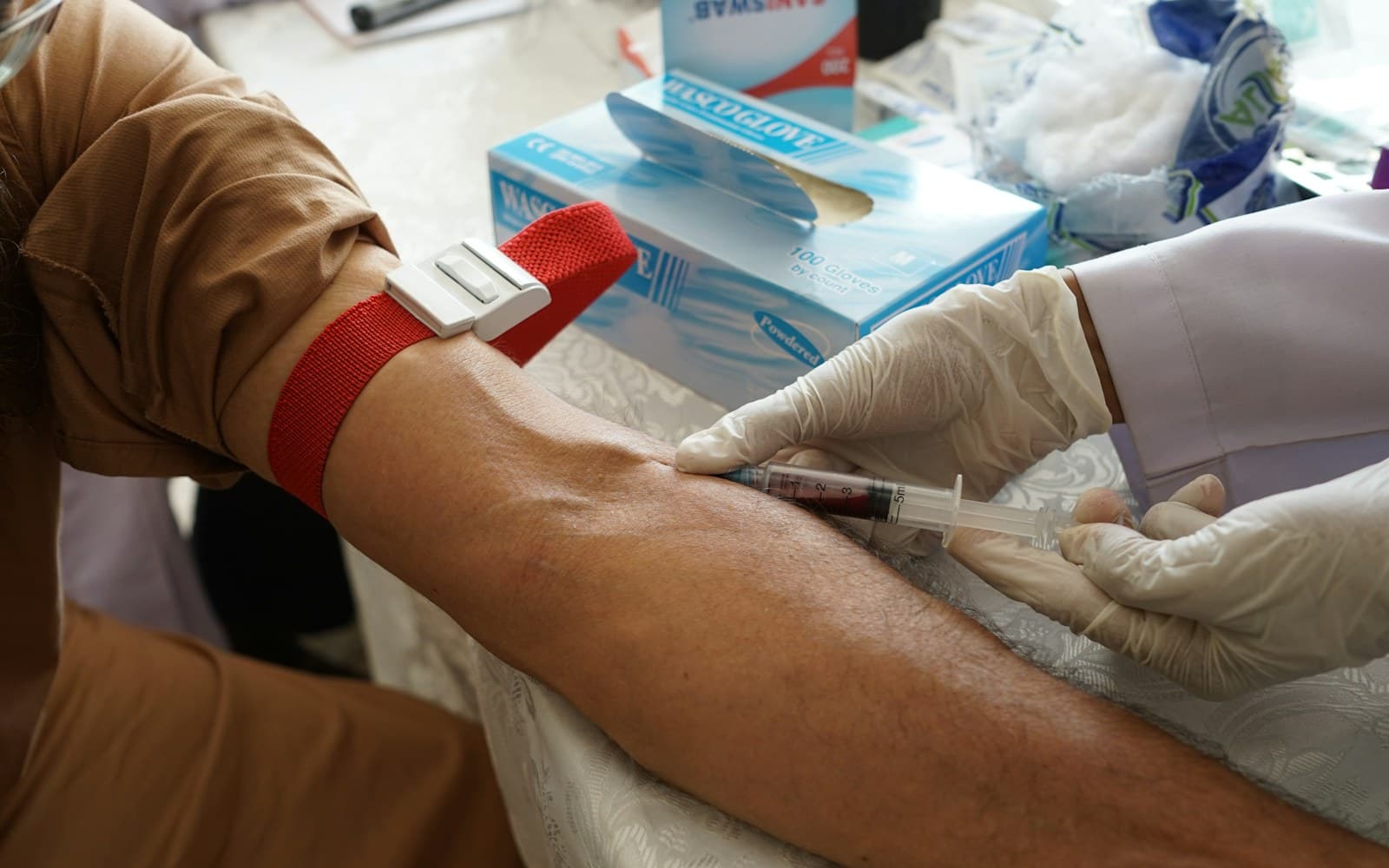
An allergy blood test, also called a specific IgE (sIgE) test, measures IgE in your blood against each allergen that is tested, for example grass pollen, house dust mite, cat or peanut. You may also hear it called a RAST test, which is an older name for the same idea.
Total IgE is often reported alongside. On its own it is not helpful for diagnosing allergy, but it can help a doctor interpret the specific IgE results.
Guidance: NHS: Allergies; Allergy UK: Allergy testing; Allergy UK: Diagnostic tests used in allergy (for healthcare professionals)
Private blood testing
Blood test for this
Samples are taken at our Greysteel clinic, near Derry/Londonderry, or in Letterkenny. Prices include sample collection, with no GP referral needed.

Allergy
Allergy Blood Test
Randox allergy panels, from a first-line check to complete testing, or focused panels for food, pollen, pets or mould.
9 biomarkers
From £169
A positive result is not the same as an allergy
A positive result means your body has made IgE to that allergen. This is called sensitisation. Some people are sensitised without ever getting symptoms, so a positive test alone does not confirm what is causing your symptoms.
The level of IgE also does not necessarily tell you how severe a reaction would be. A high result does not always mean a serious allergy, and a low result does not always mean a mild one.
This is why UK guidance says allergy testing should follow a detailed allergy-focused history, and results should be interpreted alongside that history. Testing lots of allergens “just to see” can produce positive results that lead people to cut out foods they eat without any problem.
Some fruit, vegetable and nut results can be positive because of cross-reactivity with pollen, particularly birch pollen. This is known as pollen food syndrome, and most cases are mild.
- Positive result and matching symptoms: supports an allergy to that allergen.
- Positive result and no symptoms when exposed: usually sensitisation only, and not a reason on its own to avoid it.
- Negative result but a strong history: an allergy is not ruled out, and specialist referral may be needed.
Guidance: NICE CKS: Allergic rhinitis, investigations; Allergy UK: Diagnostic tests used in allergy (for healthcare professionals); NICE CG116: Food allergy in under 19s, assessment and diagnosis (recommendations); Allergy UK: Pollen food syndrome
Blood tests, skin prick tests and food challenges
A skin prick test places a drop of allergen on the skin, usually the forearm, and a tiny prick checks for an itchy bump (a wheal). Results are ready in about 15 minutes. It is usually done in an allergy service, often after a GP referral.
A blood test is often used when a skin prick test is not available or not suitable, for example when someone cannot stop antihistamines or has eczema on the skin. Antihistamines can suppress skin prick results, but you do not need to stop them for a blood test.
Both tests only look at immediate (IgE-mediated) reactions, where symptoms usually start quickly, typically within two hours. Delayed reactions are not IgE-mediated and are usually assessed with a supervised elimination diet instead.
When other tests are unclear, an allergy clinic may offer an oral food challenge, where small, increasing amounts of a food are eaten under medical supervision. It is the gold standard for confirming or ruling out a food allergy, and it must never be tried at home.
Guidance: Allergy UK: Allergy testing; Allergy UK: Diagnostic tests used in allergy (for healthcare professionals); NICE CKS: Allergic rhinitis, investigations; NICE CG116: Food allergy in under 19s, assessment and diagnosis (recommendations)
Why food intolerance and IgG tests are not recommended
A food intolerance is different from a food allergy. It is not caused by the immune system overreacting, so it cannot cause a serious allergic reaction, although it can still make you feel unwell.
There is no blood test for diagnosing food intolerance. The NHS says some intolerance tests you can buy are not recommended, as there is limited evidence that they are accurate. NICE advises against using IgG blood tests, vega testing, applied kinesiology or hair analysis to diagnose food allergy, and Allergy UK warns these tests may give false readings.
If you think a food is upsetting you, a GP or dietitian may suggest keeping a food and symptom diary, then a planned elimination diet followed by reintroducing the food to see whether symptoms return.
Guidance: NHS: Food intolerance; Allergy UK: Food intolerance; NICE CG116: Food allergy in under 19s, assessment and diagnosis (recommendations); Allergy UK: Allergy testing
Getting the most from an allergy blood test
An allergy blood test is most useful when it answers a specific question, such as which pollens, pets or house dust mites might be behind hay fever-type symptoms, or whether a food you reacted to soon after eating it is a likely cause.
Before testing, write down what happened each time you reacted: what you were exposed to, how quickly symptoms started, what they were, how long they lasted and what helped. Photographs of a rash or swelling can also help. Results are only meaningful alongside this history.
- Keep taking your usual antihistamines. They do not affect an allergy blood test.
- Do not eat a food that has caused a reaction to “test” it at home.
- Choose allergens that fit your symptoms rather than the largest possible panel.
- Take your results to your GP or an allergy clinic, who can arrange further tests, treatment or an adrenaline auto-injector if needed.
Guidance: Allergy UK: Allergy testing; Allergy UK: Diagnostic tests used in allergy (for healthcare professionals)
Severe reactions and when to get help
A severe allergic reaction (anaphylaxis) is a medical emergency. A blood test is not the right first step after a serious reaction. Call 999 for an ambulance straight away if you or someone with you has any of these signs, and use an adrenaline auto-injector (such as an EpiPen) if one is available.
- Lips, mouth, throat or tongue suddenly become swollen.
- Breathing very fast or struggling to breathe, wheezing or feeling like choking.
- Throat feels tight or it is hard to swallow.
- Skin, tongue or lips turn blue, grey or pale.
- Sudden confusion, drowsiness or dizziness, or someone faints and cannot be woken.
- A child is limp, floppy or not responding like they normally do.
Guidance: NHS: Allergies; NHS: Anaphylaxis; NHS: Food allergy
When to see a GP or allergy specialist
See a GP if you think you or your child may have an allergy. A GP may arrange allergy tests or refer you to a specialist allergy clinic. After anaphylaxis, you should be given adrenaline auto-injectors and may be referred to an allergy specialist for testing and advice.
Specialist referral may also be considered when there is a strong suspicion of an immediate food allergy but tests are negative, or when several food allergies are suspected.
Guidance: NHS: Allergies; NHS: Anaphylaxis; NICE CG116: Food allergy in under 19s, assessment and diagnosis (recommendations)
Common questions
Questions about this topic.
Not always. A positive result shows sensitisation, meaning your body has made IgE to that allergen. Some people with positive results have no symptoms, so the result is interpreted alongside your symptoms and history.
Sources and further reading
We use authoritative UK guidance and patient information. External sources may be updated after this guide is published.
- NHS: Allergies
- NHS: Anaphylaxis
- NHS: Food allergy
- NHS: Food intolerance
- NICE CG116: Food allergy in under 19s, assessment and diagnosis (recommendations)
- NICE CKS: Allergic rhinitis, investigations
- Allergy UK: Allergy testing
- Allergy UK: Diagnostic tests used in allergy (for healthcare professionals)
- Allergy UK: Food intolerance
- Allergy UK: Pollen food syndrome